menu

The thyroid.

About the thyroid

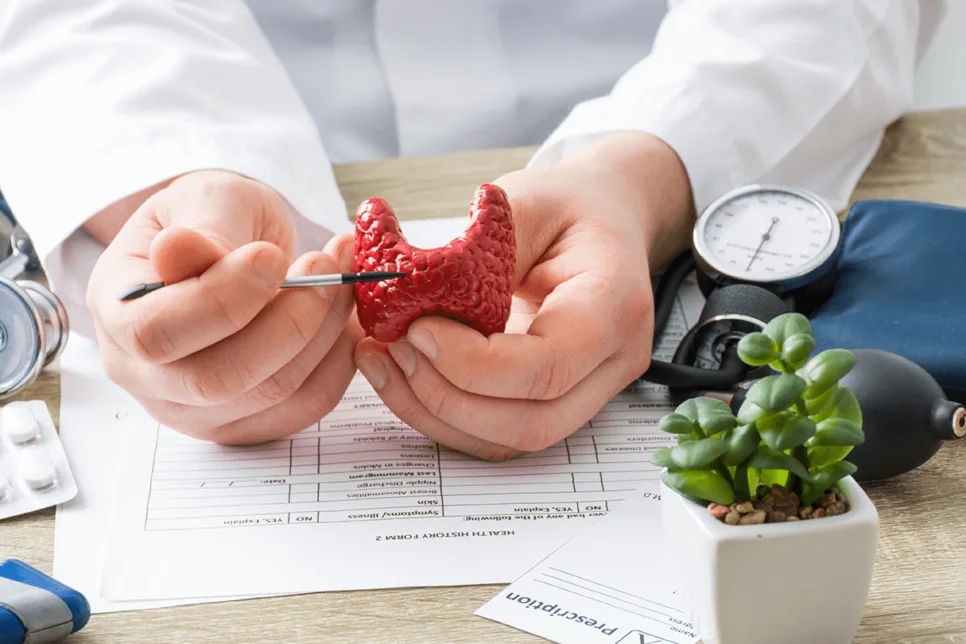
The thyroid gland is a butterfly-shaped organ located at the base of the neck, in front of the windpipe. It is the “master controller” of metabolism, and plays a key role in our health and wellbeing.¹˒² It makes, stores and releases thyroid hormones into the blood, thus regulating metabolism.² These hormones are essential for the proper functioning of all bodily tissues and organs.³ They enable our body to use its stores of energy efficiently, thereby controlling temperature and allowing our muscles to work properly.³

Who is at risk?

Thyroid dysfunction is very common throughout the world, especially in women.4,5

Certain times in a woman’s life make her more vulnerable to thyroid problems. These include:4

  • Recent pregnancy (hyperthyroidism)
  • Experiencing hormonal changes due to pregnancy, childbirth or during the menopause (hypothyroidism)

Regardless of your sex, you are at risk of thyroid dysfunctions if you:4

  • Have a family history of thyroid problems (hypothyroidism and hyperthyroidism)
  • Have an autoimmune disease such as type 1 diabetes (hypothyroidism and hyperthyroidism)
  • Are over the age of 60 years (hypothyroidism and hyperthyroidism)
  • Have a personal history of thyroid disorders or have had thyroid surgery (hypothyroidism and hyperthyroidism)
  • Have Down’s or Turner’s syndrome (hypothyroidism)
  • Have a personal history of lithium use (hypothyroidism)
  • Have consumed significant amounts of iodine via food or medication (hyperthyroidism)

People whose necks have been exposed to radiation are also more likely to suffer from thyroid problems.4

References

NG-NONT-00014

Date of Prep: May 2026

This site is registered on wpml.org as a development site. Switch to a production site key to remove this banner.